

Do you know what I did yesterday ?! I was in a training on organic makeup that KTF held together with a chemist and a toxicologist from Tointelligence, and it was so interesting!
I learned a lot but thought I would share the most interesting parts for you today! :)

What are the requirements for organic cosmetics?
For products that are certified organic, there are a lot of requirements, such as how large % of the ingredients should be organic, what the remaining ingredients may / may not consist of and what applies to packaging, animal ingredients, etc. What you should be aware of is that these requirements are different from certification to certification, because there are many different certifications and everyone sets their own requirements.
För att veta exakt vilka krav som gäller för just den produkt du har i handen, så måste man alltså kolla på vem som har certifierat produkten, t.ex. “Ekologiskt certifierad av Ecocert Greenlife”.
For products such as are not certified organic, there are no requirements at all except that you must always adhere to the marketing law. In practice, it is therefore completely legal to market your hand cream as organic, even if it only contains 2% organic ingredients and the rest silicone type. However, you must not market a product as organic if it does not contain anything organic at all, because then it is false advertising.
Are there rogue ecological certifications?
Många märken gör sina “egna certifieringar” och marknadsför dom som ekologiska, för man kan ju vara lika ekologisk som ett certifierat märke fast man inte vill betala för att få produkterna certifierade (det kostar ganska mycket). Det är inte nödvändigtvis fel med det. Men det innebär också att man kan göra en egen certifiering som ger intrycket att produkten är mer ekologisk och naturlig än vad den är, för då sätter man ju också sina egna krav. Det är typ som att vara ocertifierad ekologisk, men för kunden så ser det ut som en certifiering.
Therefore, it is important to check who has certified the product if you want to keep track.
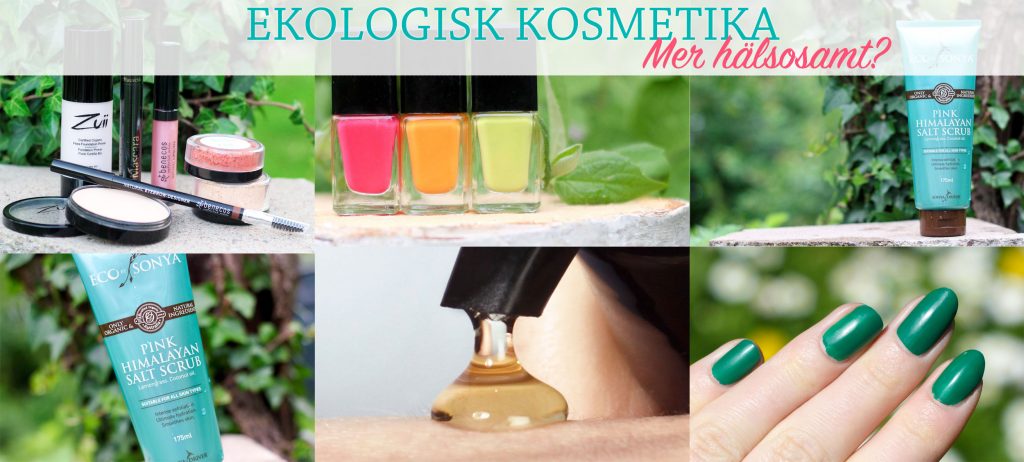
Is organic makeup healthier?
Not always healthier, but better for the environment! A natural cream can be as caring and gentle as another natural cream that is also organic. This also applies to synthetic creams, it all depends on who you compare with. It's chemistry how a product affects the skin whether we are talking about natural or synthetic ingredients. All cosmetics must be safe to use and all products have the same requirements, regardless of organic or non-organic.
Natural is not necessarily mild and synthetic is not necessarily bad for the environment. There are also synthetic ingredients that are an exact copy of a natural ingredient, purely chemical, but manufactured in a factory, and physically, the body does not notice any difference between these because they are chemically similar.
It is also about quantity, if you google a specific ingredient, you can be scared of the dark, but the same ingredient can do great good in a small amount. Did you know that limonene in lemon has the following list of chemicals:
* Flammable liquid and vapor
* Irritating to skin
* May cause an allergic skin reaction
* Very toxic to aquatic life with long lasting effects
But it is not dangerous for that, neither in food nor in products. But just like with everything (in principle) you can still be allergic.
Me personally try to stick to natural and organic as much as possible for moral reasons, and because I would rather pay for fine, natural ingredients in a skin cream than for silicone (even though I am not against silicones in the right products).
Are there the same requirements for cosmetics as for food?
When it comes to organic foods, the rules are not the same as for cosmetics. For food, organic means that the raw material is produced in accordance with Regulation (EC) 889/2008, but for cosmetics there are no such requirements.
Däremot är kraven på all kosmetika mer stränga när det kommer till inci-lista, alltså ingrediensförteckningen. På livsmedel så behöver det bara stå “mjölk, socker, vetemjöl” men på kosmetika så måste det stå i detalj, t.ex. vad mjölk består av.
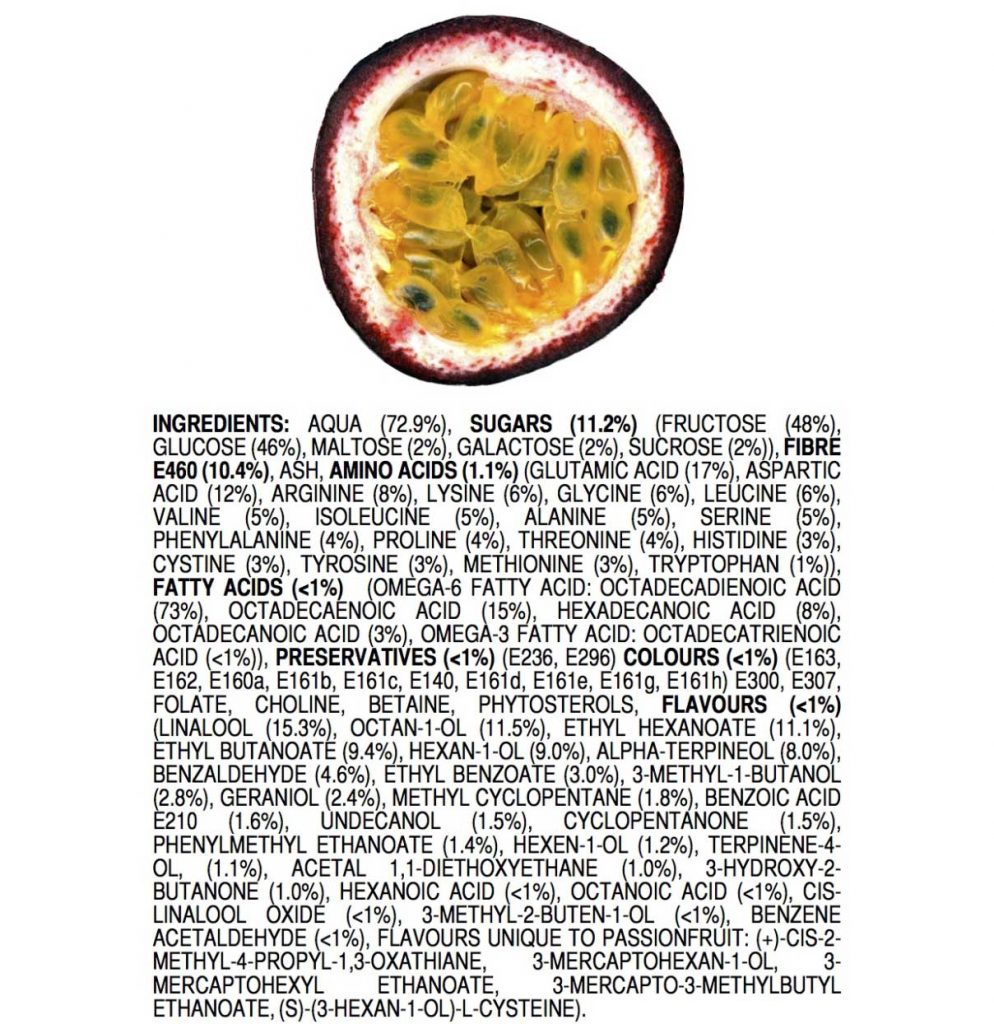
Should there be an Inci list on e.g. passion fruit, it becomes super long and contains, among other things, Benzaldehyde (poison) and a number of perfume allergens.
Det sprids mycket om ekologiska krav o.s.v. och det står olika på typ alla sidor, vilket var en stor del av anledningen till att jag ville gå den här utbildningen. Jag vill så klart lära mig men framför allt så vill jag inte riskera att sprida falska påståenden som jag “lärt mig” någonstans.
Myt 1 – “Vatten kan inte räknas som ekologiskt”
Water that is added to a product is not organic, but water that is naturally present in the ingredients is certified organic if that ingredient is. Therefore, a toner can be 100% organic if it is 95% water from aloe vera and 5% other organic ingredients. While an exactly the same toner that has 95% tap water and 5% other organic ingredients only become 5% organic.
And if you take aloe vera as an example, it is rarely transported fresh, because it is unnecessary to transport so much water (both for the environment and economy) therefore aloe vera is often lyophilized to a powder so that all water disappears. At the manufacturer's, water is then added to the aloe vera powder again, and even that water is then considered organic. Although it is actually also water from a tap.
Myt 2 – “En produkt behöver bara innehålla 10% ekologiska ingredienser för att få kallas ekologisk, resten kan vara vilka ingredienser som helst.”
All certifications have different requirements, and it can also differ between different product categories. And whether you count water or not. For example, COSMOS ORGANIC requires that 20% of the total end product is organic, except if the product contains at least 80% minerals because then it is sufficient that the organic ingredients are at least 10%.
Minerals cannot be certified as organic, but many certifications have requirements for which minerals may be used. There are thus requirements also for the non-organic ingredients in an organically certified product, e.g. around GMOs (genetically modified organisms), nano-particles, packaging and animal ingredients, etc.
As I said, it is not possible to know what the requirements are for an organic product, but to read the exact requirements for the specific certification that the product has.

Myt 3 – “Ekologiskt smink får inte testas på djur”.
It is illegal in the EU to use animal-tested products and animal-tested ingredients, with the exception that brands within the EU may sell their products to a third party that performs animal tests, e.g. China. Some organic certifications have zero tolerance for animal testing. However, some have exceptions (just like the law) for products sold in countries with animal testing laws.
For example:
An organic product with "Organically certified Cosmos Organic" may retain their certification even if they sell to China, which tests the products on animals.
However, with the Natrue Certification, there is zero tolerance and you must not be "Organically certified by Natrue" and at the same time sell your products in China.
However, China's laws are changing and as I understand it, a product must no longer be tested on animals just because it is sold in China, but I am not loaded on that subject so I keep the details unsaid until further notice.
It was a long but interesting post! :) Hope you thought it was instructive and interesting as I think! There is of course even more to tell and go through after yesterday's training, but I have to take a break somewhere I feel, I can hold on for any length of time otherwise;)
Hugs are!




 English
  Swedish
  Spanish
Interesting to know!
Sure :) What fun that you also like it! :)